Certified Dog Trainers in Los Angeles: Credentials and How to Choose
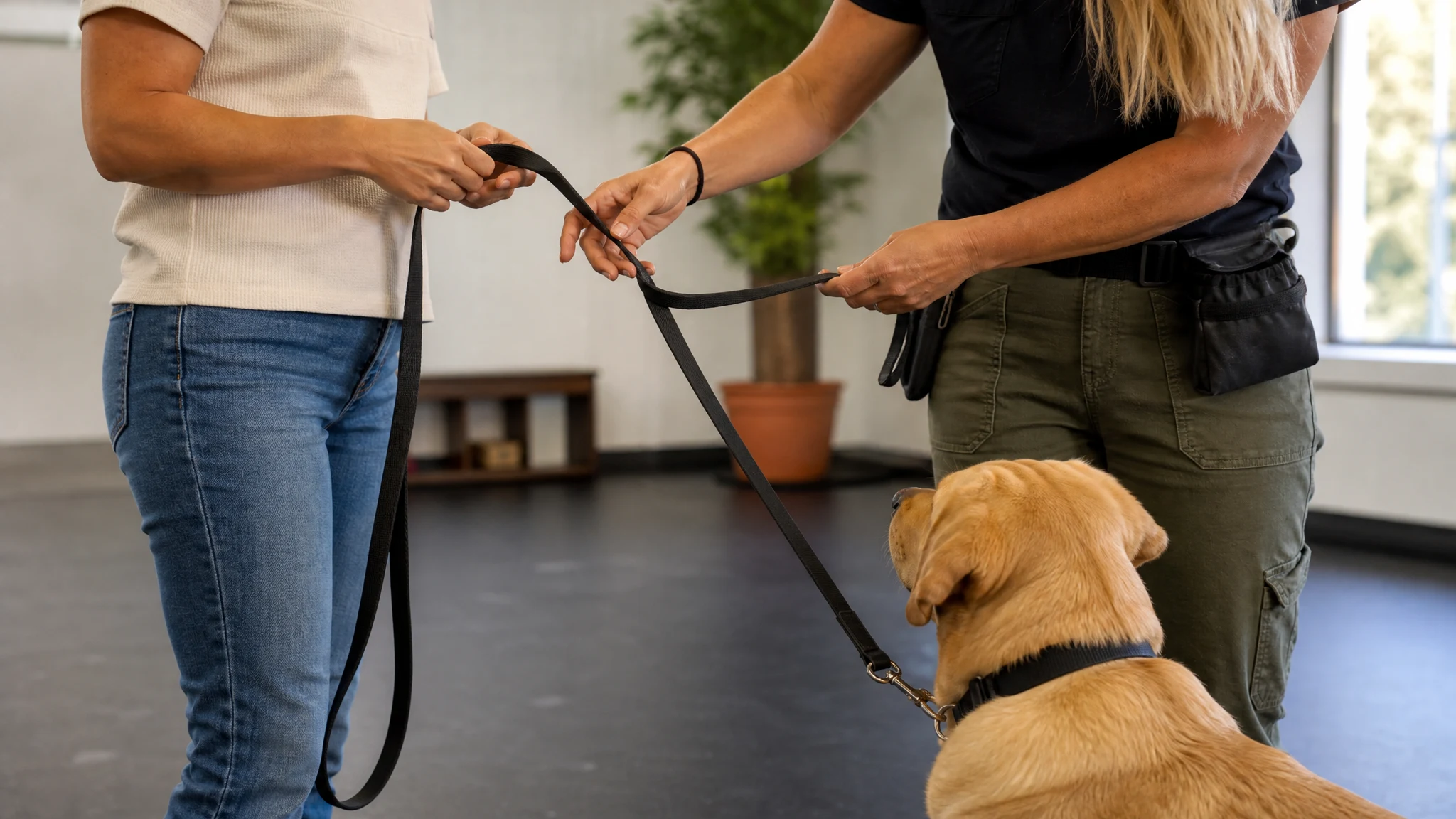
General training information. For aggression, sudden behavior changes or health concerns, see your veterinarian first.
Many owners want the best dog trainers in Los Angeles, and it is a fair wish. But no list can honestly rank trainers for you. A trainer who is wonderful for a nervous rescue in an apartment may not suit a high-energy puppy in the Valley. This guide shows you how to compare, not who to crown.
Below you will find what the main credentials mean, the certified professionals we can name for the city, how the options compare, and a checklist of questions to ask before you book.
Dog Training Is Unregulated, So Credentials Matter
Dog training is generally not a licensed profession. Anyone can print business cards that say "dog trainer," with or without education, experience or a humane approach. If you want to confirm what California requires of a particular business, check with the relevant state or city agency.
That is why independent certifications are useful. They do not guarantee a perfect match, but they show that a trainer chose to be assessed by an outside organization. For a certified dog trainer in Los Angeles, that outside check is one of the few objective signals you can use.
Two more points before the credentials:
- A credential tells you about knowledge and standards. It does not tell you whether the trainer is a good fit for your dog or your household.
- Methods matter as much as letters. The American Veterinary Society of Animal Behavior (AVSAB) supports reward-based training. Shock, prong and choke collars, alpha rolls, scruffing and dominance methods are not part of humane training.
What the Common Credentials Mean
CPDT-KA
Certified Professional Dog Trainer, Knowledge Assessed. It is awarded by the Certification Council for Professional Dog Trainers (CCPDT) and is an exam-based credential covering general training skills. It is the most common certification among the Los Angeles trainers listed below.
CBCC-KA
Certified Behavior Consultant Canine, Knowledge Assessed. This is the CCPDT's behavior consultant credential. It points to work on problem behavior such as fear, reactivity and anxiety, beyond basic manners.
KPA-CTP
Karen Pryor Academy Certified Training Partner. It comes from a school that teaches reward-based, clicker-style training. None of the professionals listed below are shown with this credential, so if you want a KPA-CTP, check the academy's own directory.
IAABC
The International Association of Animal Behavior Consultants offers its own consultant certifications. None of the professionals listed below are shown with an IAABC credential, so confirm any claim directly with the organization's directory.
DACVB
A veterinary behaviorist is a veterinarian with advanced training in behavior. The two Los Angeles practices listed below describe their veterinarians as board-certified behaviorists. This is a medical route, and it matters when behavior may have a health cause or may need medication.
CCPDT (the organization)
The CCPDT keeps a public certificant directory. You can look up a trainer's profile and confirm the credential is current instead of relying on a website badge.
Certified Trainers and Behavior Professionals Listed for Los Angeles
These are the certified trainers and behavior professionals we can name, with the credentials and areas shown in their own listings. This is not a ranking and not a full list of everyone in the city. Trainers in other parts of the county also serve Los Angeles, so a dog trainer near Los Angeles neighborhoods you live in may not appear here.
Certified trainers and behavior consultants
| Name | Business | Credentials | Area listed |
|---|---|---|---|
| Kim Kurland | PAWSitive Hound Dog Training | CPDT-KA | San Fernando Valley and surrounding areas of Los Angeles (based in Tarzana) |
| Katherine (Kate) Anderson | Moondog Dog Training | CPDT-KA, CBCC-KA | Los Angeles, CA 90031 |
| Jessica Leigh Gore | Competent Pup | CPDT-KA, CBCC-KA | Los Angeles, CA 90038 |
| Elisha A. Stynchula | "I Said Sit!" School for Dogs | CPDT-KA | 3368 S. Robertson Blvd, Los Angeles, CA 90034 |
| Caryl R. Wolff | Doggie Manners | CPDT-KA | Los Angeles, CA 90025 |
| Kristin N. Burke | Cognitive Dogs | CBCC-KA | Los Angeles, CA 90018 |
| William Sean Miller | Willful Dogs | CPDT-KA, CBCC-KA | Los Angeles, CA 90034 (West LA) |
| Jeffrey Dauber | Chutzpaws Dog Training | CPDT-KA | Los Angeles, CA 90025 |
| Russell Hartstein | Fun Paw Care | CPDT-KA | 3079 Patricia Ave, Los Angeles, CA 90064 |
| Jocelyn A. Walls | Muttineer | CPDT-KA | Los Angeles, CA 90041 |
Kim Kurland's credential comes from her own website. The others come from CCPDT certificant directory profiles. Links to each are in the Sources list.
Veterinary behavior professionals
| Name | Practice | Credential | Format |
|---|---|---|---|
| Karen Sueda, DVM | Karen Sueda Veterinary Behavior Inc. | Board-certified veterinary behaviorist (the practice site does not print "DACVB") | Housecalls throughout Los Angeles County |
| Rachel Malamed, DVM | Dr. Rachel Malamed (behaviordogtor.com) | DACVB veterinary behaviorist | Based in Los Angeles; virtual and in-person appointments |
Pros and Cons by Type of Professional
Since we cannot honestly rate individuals, here is how the three kinds of professional on this page compare.
Trainers with CPDT-KA
Pros:
- An outside organization has assessed their training knowledge.
- They suit everyday goals such as puppy manners, leash skills, recall and household rules.
- Several offer classes, private lessons or both.
Cons:
- The credential covers general training. It does not by itself show experience with serious fear or aggression.
- It is a knowledge credential, so it says little about coaching style or whether you will click with the person.
Behavior consultants with CBCC-KA
Pros:
- The credential is focused on behavior problems rather than basic obedience.
- It is a reasonable place to start for anxiety, reactivity or fear.
Cons:
- A consultant cannot diagnose a medical cause or prescribe medication. A veterinarian has to rule those in or out.
- Behavior work often takes more time than a basic course.
Veterinary behaviorists
Pros:
- They are veterinarians, so they can look at medical and behavioral factors together.
- They suit complex or severe cases, including aggression toward people.
Cons:
- Appointments are usually a larger commitment than a training class. Ask each practice about fees and availability.
- Many cases still need a trainer to carry out the day-to-day training plan.
What Training Costs: A Few Published Examples
Most listed businesses do not publish prices in the places we could read, so check each website. Two do:
- "I Said Sit!" School for Dogs lists Puppy Preschool (six one-hour in-person sessions plus online orientation, for puppies under 20 weeks) at $275, Puppy Playgroup (four 45-minute sessions) at $150, and Adult Manners (dogs over 20 weeks, six sessions) at $275. A one-hour new-student private consultation is $200, and its board-and-train GED program is $4,500 to $5,580.
- Doggie Manners lists a first in-home lesson of about 1.5 hours at $325 in its primary service area, $225 per hour after that, and a package of three 1.5-hour lessons at $800.
Prices can change, so confirm on the business's own site. For a wider look at formats and budgets, read our guide to dog training in Los Angeles, where to train and what it costs.
Matching the Option to Your Situation
These are suggestions by use case, not rankings.
- New puppy: A group puppy class gives structure and socialization. "I Said Sit!" School for Dogs publishes its Puppy Preschool details. It requires at least two parvovirus and distemper boosters, Bordetella, and a fecal test result from your vet before enrollment, and it recommends leptospirosis and influenza vaccines. Other businesses will have their own rules, so ask. City dog parks do not admit dogs under four months, according to the Los Angeles Department of Recreation and Parks.
- Manners and leash skills at home: Look at CPDT-KA trainers who offer private in-home lessons, and ask where they work. Trainers are listed in Tarzana and the Valley, in West LA, and in Northeast LA, so geography may narrow your choices quickly.
- Fear, anxiety or reactivity: Consider a CBCC-KA consultant, and start with a vet visit to rule out pain or illness.
- Aggression toward people, or a sudden behavior change: Call your veterinarian first, then involve a certified behavior professional such as a veterinary behaviorist. Do not wait on this.
- Busy schedule, limited time: Ask about virtual sessions or in-home coaching. Dr. Malamed's practice lists virtual and in-person appointments.
Whichever route you take, make sure your dog's rabies vaccination is current. The City of Los Angeles dog license is valid only with a current rabies certificate under the Los Angeles Municipal Code. Ask your veterinarian how often your dog needs it. Also ask your vet about the canine influenza H3N2 vaccine before classes or group activities. LA County Veterinary Public Health strongly recommends it before boarding, daycare, dog parks or group activities.
Questions to Ask Before You Hire
Print this list or keep it on your phone.
- Which credentials do you hold, and can I look you up in the certifying organization's directory?
- What training methods do you use? Do you use any shock, prong or choke collars, or physical corrections?
- What happens if my dog gets stressed or overwhelmed in a session?
- What will the first session look like, and how long will it last?
- Do you work with my dog's specific issue, such as reactivity, separation distress or resource guarding?
- Will you work with my veterinarian if a medical cause is possible?
- What are your fees for classes, private lessons and packages? Is there anything extra?
- What vaccines do you require before class?
- Where do sessions happen, and do you travel to my part of Los Angeles?
- What homework should I expect, and how will you teach me, not just my dog?
- What are your cancellation and refund policies?
- Do you promise specific results? (A trainer who guarantees an outcome is a red flag, because every dog is different.)
Verdict: How to Choose
There is no single winner, and we will not name one. Here is the reasoning behind that.
- Credentials narrow the field. Choosing a certified dog trainer in Los Angeles removes people with no outside assessment. That is a good first filter.
- Methods come next. Ask questions 2 and 3 above and listen closely. A reward-based approach in line with AVSAB guidance is the standard to hold.
- Fit decides the rest. Location, schedule, price, teaching style and your dog's temperament matter more than any single letter combination.
A practical path: for everyday training, pick two or three CPDT-KA trainers whose area and format suit you and talk to each. For behavior problems, begin with your veterinarian and move to a CBCC-KA consultant or a veterinary behaviorist. For anything involving bites or aggression toward people, go straight to your vet and a certified behavior professional.
Credentials and listings change. Confirm each profile on the certifying organization's directory before you book.
Sources
- PAWSitive Hound Dog Training (Kim Kurland)
- CCPDT directory: Katherine Anderson, Moondog Dog Training
- CCPDT directory: Jessica Leigh Gore, Competent Pup
- CCPDT directory: Elisha A. Stynchula, "I Said Sit!" School for Dogs
- CCPDT directory: Caryl R. Wolff, Doggie Manners
- CCPDT directory: Kristin N. Burke, Cognitive Dogs
- CCPDT directory: William Sean Miller, Willful Dogs
- CCPDT directory: Jeffrey Dauber, Chutzpaws Dog Training
- CCPDT directory: Russell Hartstein, Fun Paw Care
- CCPDT directory: Jocelyn A. Walls, Muttineer
- Karen Sueda Veterinary Behavior Inc.
- Dr. Rachel Malamed, veterinary behaviorist
- "I Said Sit!" School for Dogs, group class prices
- "I Said Sit!" School for Dogs, registration requirements
- Doggie Manners, private lesson prices
- City of Los Angeles Department of Recreation and Parks, Dog Parks
- LA Animal Services, Licenses
- LA County Veterinary Public Health, Canine Influenza H3N2 advisory (March 4, 2026)